Several months with no internet meant I looked to the retro world even more than usual for my gaming. Or at least, as far as the PC goes, to the older games which would actually run on my new computer - which unfortunately did not include Grim Fandango. Booo! Retuning older games for modern systems is a bandwagon more devs should hop onto. God bless GOG.com and the various console home arcades. But it does mean that, without the web, I've been kinda limited in options.
On the subject of retro: I know I've said this before and I'm sure I'll say it again, but damn is that word irritating. Gamers of the world, I implore you to stop describing old games as retro! Around Christmas time I rewatched It's a Wonderful Life and it's not a 'retro' film. It's just a film. A film which, despite technical limitations in its production compared to modern releases, and the subsequent years' advancement of cinematic techniques and a shifting of the preconceptions of good storytelling, is still every bit as enjoyable as anything you'll see at the pictures this year.
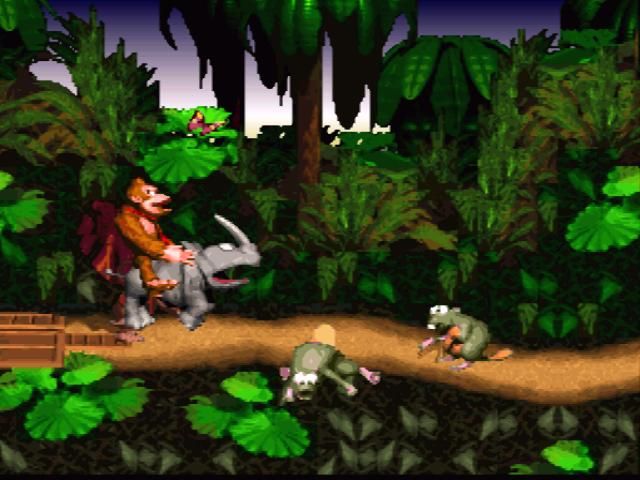
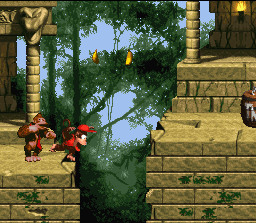
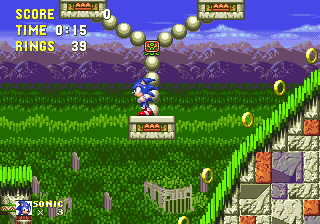
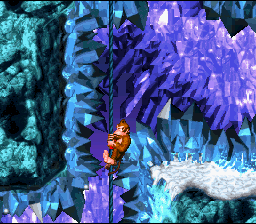
Similarly, despite their technical ineptitude by modern standards, I've been thoroughly enjoying the Micro Machines, Donkey Kong Country and Sonic the Hedgehog series, and the original Grand Theft Auto has lost barely anything despite the advances of its successors. Even ancient Disney tie-in Aladdin was as playable today as it was in 1993. The original Donkey Kong Country is the most revealing game from a technological standpoint - can you believe it was once considered the cutting edge of photorealism? I wonder if the kids of today could even see the difference in quality between its graphics and those of Sonic 3, a difference which seemed so vast to us at the time. Nonetheless, the visuals do everything they need to do to make the game playable, while still looking charmingly pretty in a - sigh - 'retro' sort of way. Maybe the ice cave levels don't make me feel physically cold anymore, but the big Rareware eyes on all the enemies are still lovely.
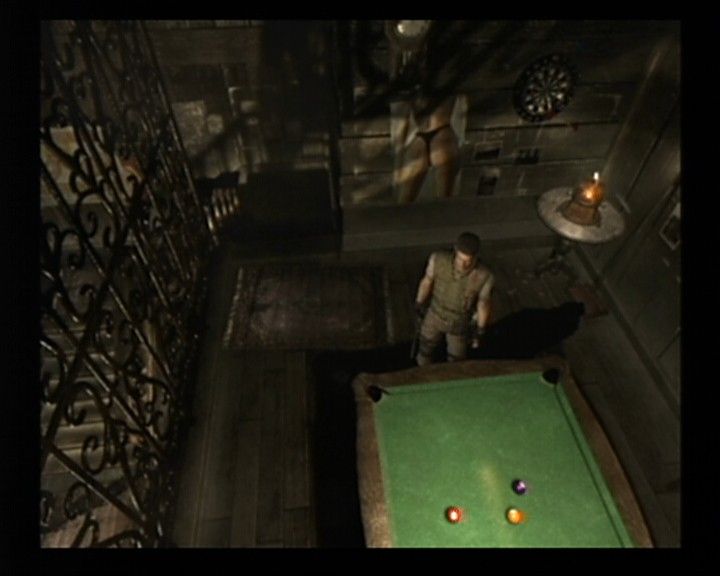
Moving ahead a few years, the GameCube remake of Resident Evil is still stunningly beautiful, and not just in consideration of when it was released. It's both confirmed and countered my arguments against the pursuit of graphic fidelity - rendered stills are obviously a lot easier to make realistic than moving images are, and the near-realism of the backgrounds is a big part of the atmosphere. But at the same time, so much attention has been paid to the architecture, the furnishings, and even the drapery that the enhanced visuals are clearly not just a sales point - it's Shinji Mikami finally getting to make this world look the way it always did in his head. The Spencer Mansion and Arklay Laboratory feel like real places, places I know as well as any house I've actually, personally lived in.
Of course improvements could be made - physics-based elements like water, particle effects and shadows are unimpressive by today's standards, ditto the resolution. But aside from such processing updates, and the plastic look to character faces which current games still suffer from anyway, it's hard to see where the graphics could be improved. It's a harmonious case of technological wizardry being applied by talented visual designers who maximise the artistic opportunities said wizardry affords, and the result means that a decade on it remains one of the best-looking games in existence. The most advanced thing I got to play during my fallow months was the PC demo of Arkham Asylum - no longer cutting edge, admittedly, but I will state without hyperbole that GameCube Resident Evil is the better looking game for all the jagged, pixelly edges and blocky shadows. That said, some areas of Arkham Asylum are moderately impressive in aesthetic design terms too, and it'll be interesting to see how it holds up in years to come. By the by, I was pleasantly surprised by how fluidly Arkham Asylum plays on PC - control-wise, it's just as smooth as the 360 version, perhaps even moreso. Having subsequently completed the game on PC, there were only a handful of places where I'd have preferred a pad.
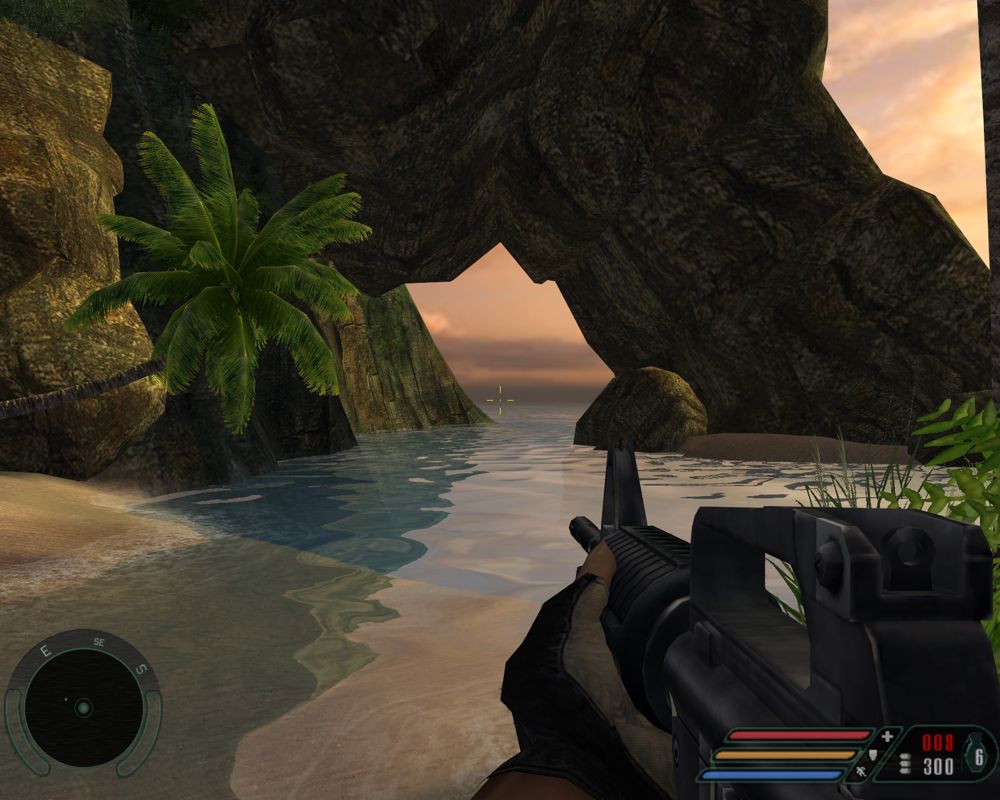
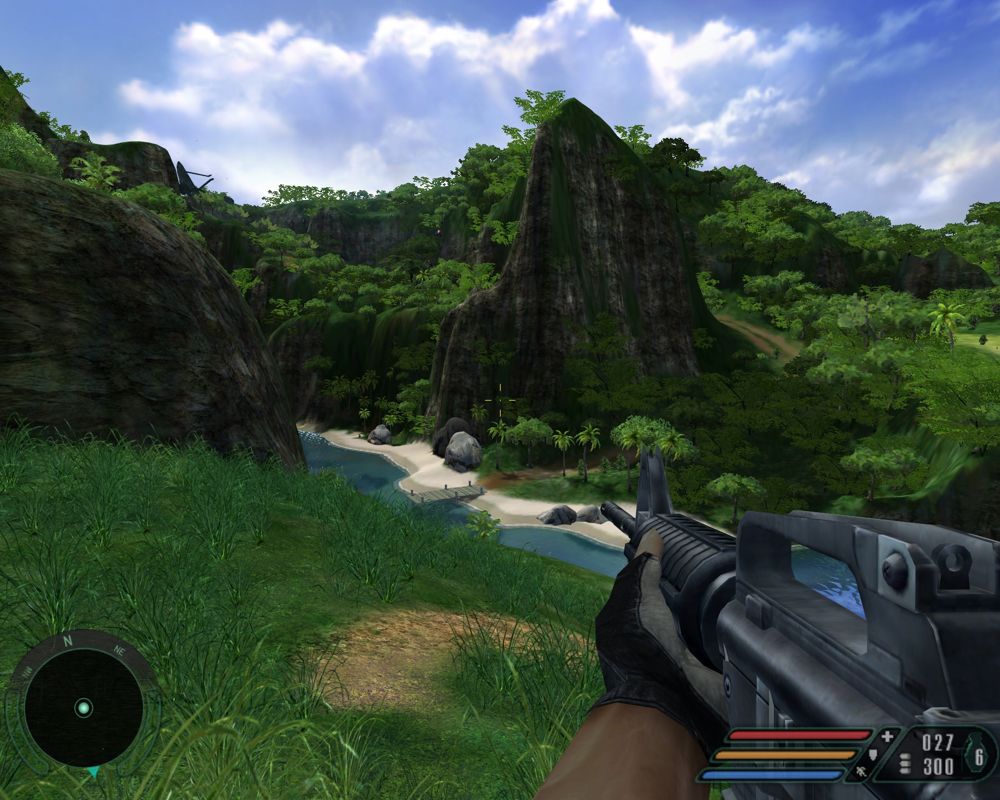
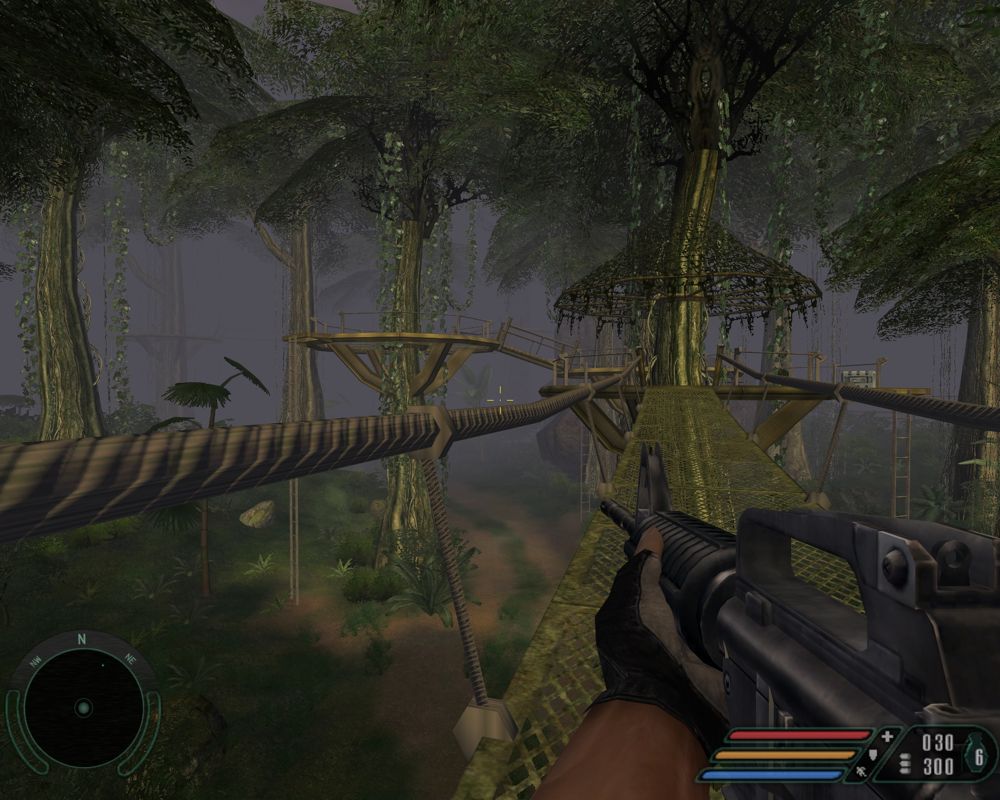
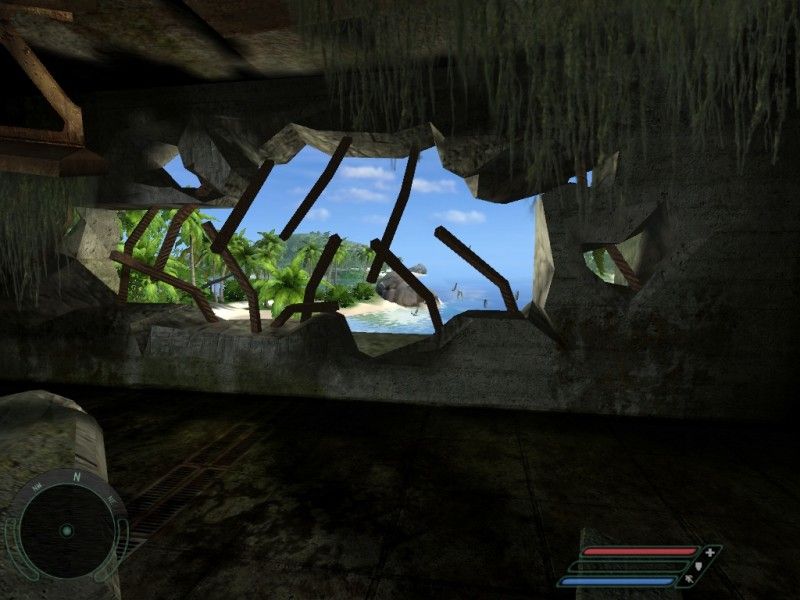
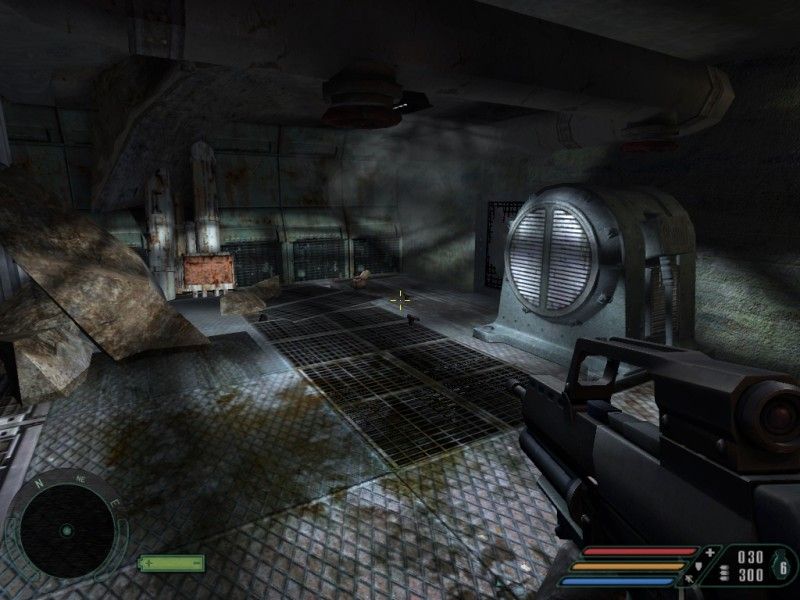
Sadly, onetime kingpin Far Cry's graphics simply don't excite me anymore. The aesthetic design was interesting enough, but leaned heavily on technical splendour for its lighting effects, draw distances and lush vegetation. These days, such things have all been bettered many times, and now it's hard not to notice how often plant models are repeated, or how the sunlight lancing through cracked walls just doesn't seem as bright as it once did (I've gained a new appreciation for High Dynamic Range since replaying Far Cry, that's for sure). Far Cry is certainly not ugly - but the bits which interest me most now are the bombed-out husks and concrete bunkers, which for a game so heavily based around creeping through dense jungles, and hopping between paradise islands, seems like something of a failure. I happily acknowledge that we have Far Cry to thank for the quality of modern graphics, but ultimately it remains tied to its era much more than any other game I've discussed so far.
I now know I'm not alone in my stance that the rabid pursuit of better graphics is as much a curse as a boon; I signed up to the official Carmageddon: Reincarnation fan forum before losing my net, and when the developers asked what we wanted to see in the game, the majority view was that physics and content - rather than cutting edge visuals - need to be the primary foci during development. I'll refine that here. Graphics are important, as the most immediate and visceral connection we get with a game, and as a sales-driving element, but more than overall fidelity what graphics need is to suit the game. For example, Carmageddon doesn't need to be too concerned with peds having perfect musculature and swaying fabric, but it would benefit greatly from per-pixel lighting, neon signs reflecting realistically off grime, oil and twisted metal - a moody atmosphere is key to Carmageddon. Fabric and musculature are of great importance to The Sims on the other hand, but lighting isn't so important there. And in FIFA, I don't care about every line on Coloccini's face being perfectly modelled half as much as I care about his passes and strikes being as fluidly realistic as possible. Every blade of grass on the pitch being individually rendered is excellent if it means the ball bounces more believably, but if it's purely for show, I don't think it's a productive use of development time.
Of course, on top of all that, graphics need to be creatively engaging; the problem with Far Cry is that its aesthetic interest was too dependent on technical advancements alone. If Carmageddon: Reincarnation is evocatively dirty and worn, nails that near-present dystopia without becoming Blade Runner cyberpunk, and features at least a few cars that look like real machines which have been customised rather than pure fantasy creations, then I'm happy. Graphical genius is a bonus, not a requirement. And judging by the Carmageddon concept art released so far, I'm going to be very happy indeed.
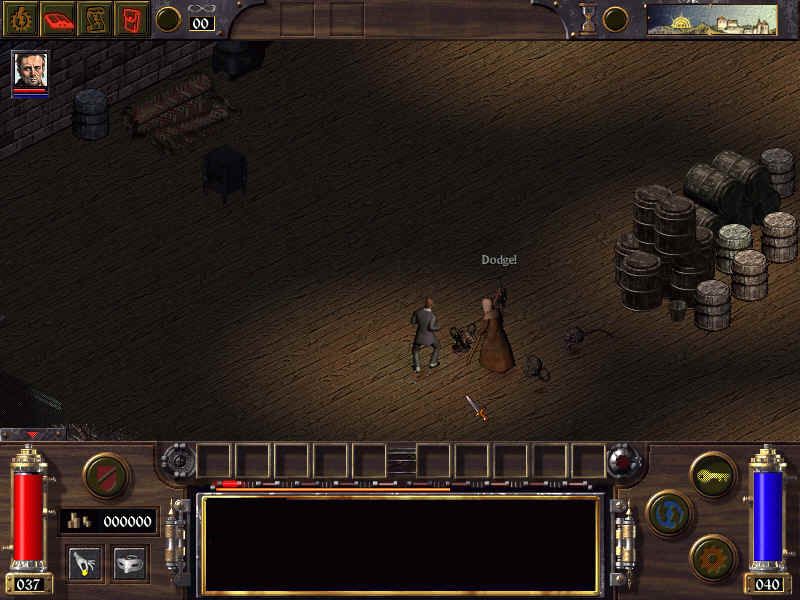
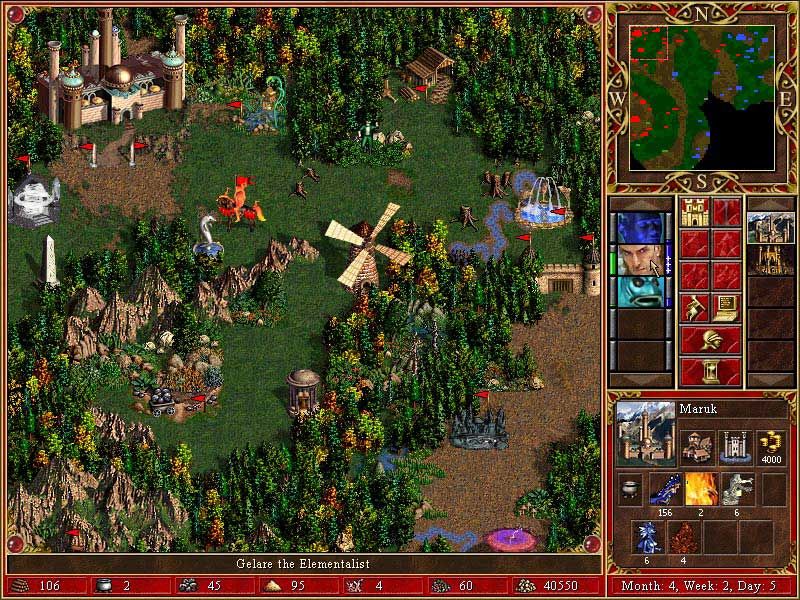
Some games were plain ugly first time round, of couse. A couple of titles I've come back to recently are Heroes of Might & Magic III and Arcanum: Of Steamworks & Magic Obscura. Each of those, on release, was widely decried for looking like a big pile of pixellated puke. Arcanum's spartan environments couldn't compete with Baldur's Gate 2, its closest contemporary - and yet today, I find something charming in Arcanum's stiff appearance. Its muddy grey scrubland, gleaming brass and starched petticoats may lack warmth, but that's in keeping with the cruel, repressed world in which it's set, and the faceless, rigidly mannequin-like character models are almost as appropriate as the old-fashioned maps and wood panel HUD. Heroes III takes the opposite tack, and tries to pack every screen with as many bright colours, outlandish creatures and incidental details as possible. It's a game bursting with life and humanity despite poor visuals - if anything, it's too cluttered, but then that was always the case, really. It remains a weird contrast to see stiff, jerky movements in sprites with such colourful, fantastical design, and these days they look rather like puppets or automatons. But even in development, 3DO must have known the game would not be breaking any technical barriers, and the upshot is that they designed a game which is functional enough to be as playable today as it was in 1999, and while not conventionally pretty, is at least interesting looking - call it the Agyness Deyn of strategy games.
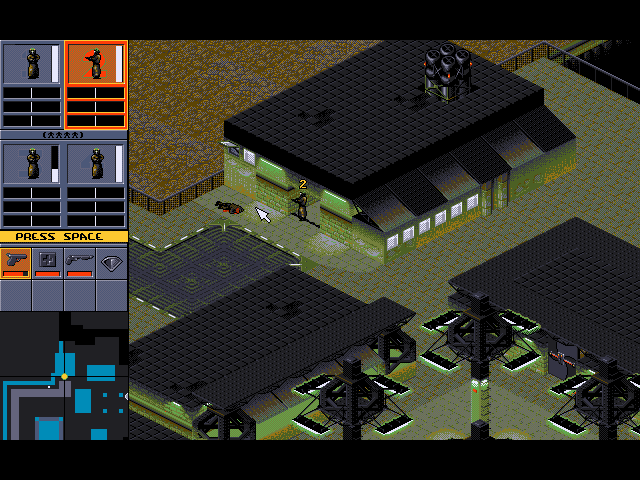
Syndicate, by contrast, has been a struggle to play nowadays. The graphics weren't terribly clear or engaging at the time, and now, it's difficult to know what's going on, and to distinguish your own squad from both the enemy and from civilians. It's still a good game, but requires a lot more perseverance than any other title I've mentioned. Not being able to see inside buildings when you enter them was a minor frustration back then; today, it's painfully out of step with how we expect to play games, and that's just one example of many issues it has. Syndicate's graphics are still fairly crisp, I'll give it that, and it was obviously made with a strong aesthetic in mind, but not enough thought was given to the necessities of gameplay. It stands a reminder that the balance between the technical and artistic is not the only one which must be struck.
The one vaguely recent PC game I got a chance to play in the winter months was the indie physics platformer NightSky, which is suprisingly entertaining. Much like Braid, NightSky hits a great equilibrium of visual elements. Technical proficiency means it runs smoothly while handling the physics puzzles, the aesthetic design is strikingly beautiful, and it's always clear and readable from a gameplay perspective. Compare that to Super Meat Boy which suffered from occasional lag or camera overshoot, to Alien Hominid and Viewtiful Joe, in which the gameplay elements weren't always distinguishable from the background, or to Limbo in which the main character was intentionally designed to look like part of the background.
Courtesy of Evis T and his portable gadgetry, I also had fun with the wonderful Android games Cut The Rope and Dragon, Fly!, which similarly match the visuals to the game effectively - both are a lot crisper than, say, Fruit Ninja or Burn The City, but Fruit Ninja's bright colours suit it more than cartoonish line drawings would, while Burn The City doesn't need to be especially clear because it's a bit more sedentary. It's not a new trend, of course; I've revistited a couple of indie games from a few years back like Ocular Ink, which is quite ugly but appropriately uncluttered for a fast paced game of drawing, and The White Chamber, which I'll talk about in more detail soon - for now, one thing I love about it is how subtly different the useable elements of the game world look from the non-useable. There's no need for tedious pixel sweeping. but at the same time, they don't stick out like a sore thumb, so you still have to pay attention, and for a point and click adventure that's one of the magic elements which can make a good game into a great game.
A cautionary tale to close this post, regarding picking up old games: I came back to Chrono Trigger after almost a year and had no idea how far through I was or what I was supposed to be doing. I left off my Secret of Mana playthrough even longer ago than that, and I expect I'll probably just need to start again.

Showing posts with label retro. Show all posts
Showing posts with label retro. Show all posts
Tuesday, 24 April 2012



Thursday, 23 June 2011
Now we are 1.6
I meant to make this post longer, funnier, more pretentious and - ahem - about three weeks ago. Sadly, events conspired against that, so here's a late and cut down version of my thoughts on Minecraft 1.6.
The big thing to come out of the 1.6 update (or rather, collection of 1.6 updates) was the ability to travel between the normal overworld and the alternate hell-dimension, the Nether, in-game in multiplayer servers - meaning no more having to piss about with file names. I've found that adventuring in the Nether is very different to regular caving. In an - and forgive the awkward phraseology - overworld cave network, I always feel tempted to push on beyond my limits. There's always another passage, another vein of ore. It's different in the Nether.
The Nether is open plan, more or less, so simple navigation is easier. Actually getting where you want to go, though; that's much, much harder, because the ground is so uneven. Almost every block of the way you're building staircases or bridging gaps, making it slow going. These factors, combined with both the relative scarcity of essential minerals and the overwhelming lethality of the Nether in general, mean that adventuring is a much more focused affair. Rather than epic four hour potholing expeditions, you descend, pinpoint what you want, grab it and leave as soon as possible. It's much more of a tense race against time to get what you want before you die, compared to the grand exploration jaunts of an overworld cavern system.
Tha's no bad thing. Contrasting gameplay elements add value. There were times when a big potholing trip didn't grab me, as I wanted something a bit more adrenal to do, and the Nether fills that hole. Too often when I died after two hours of gathering resources only to die to an unseen creeper or sudden lava floe, the feeling wasn't one of "I'll get even with you, game" nor even "oh well, must do better next time," but "eh, bored now, cbf replaying just to lose all my stuff again. Whatever. Bai." Since overreaching is rarer in the Nether, that sort of death bringing feelings of resent and waste are also less frequent.
And if you thought overworld adventuring was a communal excercise... more than ever, the Nether requires a party to work together. There's no time for getting lost or wandering off, no need for "Dig up, stupid" type conversations. You have to be a co-ordinated team to pull off a big heist. The biggest threats are the ghasts - giant floating cow/octopus things which shoot fireballs with unerring and unnerving accuracy. They can only reasonably be fought via bow and arrow, they have a longer range than player characters, and they have all the hit points in history. Oh, also: they usually come in herds of three or four. A frantic escape from an engraged ghast pack, covering each other's backs as you pelt for the portal, is something to experience.
Aside from some irritating bed bugs (ho ho!) 1.6 is the best thing to happen to Minecraft in some time. Anyone who stopped playing, I recommend you gather up a party and try out adventuring in the Nether. If nothing else, building a portal chamber can cut out on tedious travelling time between your bases topside, which was always one of Minecraft's bugbears.
Speaking of Minecraft, I've given Terraria a try. It seems fun, and it's actually surprisingly different to Minecraft. While early guesses had Terraria pegged as 'Minecraft with a bit of Castlevania,' in practice it's more the other way around. This is a platforming game at heart, which happens to feature terrain manipulation as one of your tools. A lot of the challenges revolve around working out how you can use the landscape around you to go here, fight this, collect that. My favourite Minecraft moments are the architectural challenges you come across while caving - navigating your way up a gigantic waterfall, or working out how to stem a lava river to save as much obsidian as possible, or constructing a precarious scaffold up to a vein of ore in the ceiling. I'm looking forward to trying more of Terraria and seeing how it measures up.
Another online game I've started recently is Spiral Knights, one of Steam's five free MMOs. It's cutesy and energetic and just the right side of tactical to be engaging without requiring too much concentration. It's nothing special, but it cuts down on the usual MMO gumph effectively and throws some varied challenges at you. I already like it more than any other MMO I've enountered. Review forthcoming, once I've spent some more time with it.
Back to Minecraft to close us out: Zelda Adventure looks like it could be entertaining. And the Minecraft Ghibli World is sickening in how spectacular it is, especially the Laputa chasm. Certainly makes my best-ever structures looks like complete rubbish.
The big thing to come out of the 1.6 update (or rather, collection of 1.6 updates) was the ability to travel between the normal overworld and the alternate hell-dimension, the Nether, in-game in multiplayer servers - meaning no more having to piss about with file names. I've found that adventuring in the Nether is very different to regular caving. In an - and forgive the awkward phraseology - overworld cave network, I always feel tempted to push on beyond my limits. There's always another passage, another vein of ore. It's different in the Nether.
The Nether is open plan, more or less, so simple navigation is easier. Actually getting where you want to go, though; that's much, much harder, because the ground is so uneven. Almost every block of the way you're building staircases or bridging gaps, making it slow going. These factors, combined with both the relative scarcity of essential minerals and the overwhelming lethality of the Nether in general, mean that adventuring is a much more focused affair. Rather than epic four hour potholing expeditions, you descend, pinpoint what you want, grab it and leave as soon as possible. It's much more of a tense race against time to get what you want before you die, compared to the grand exploration jaunts of an overworld cavern system.
Tha's no bad thing. Contrasting gameplay elements add value. There were times when a big potholing trip didn't grab me, as I wanted something a bit more adrenal to do, and the Nether fills that hole. Too often when I died after two hours of gathering resources only to die to an unseen creeper or sudden lava floe, the feeling wasn't one of "I'll get even with you, game" nor even "oh well, must do better next time," but "eh, bored now, cbf replaying just to lose all my stuff again. Whatever. Bai." Since overreaching is rarer in the Nether, that sort of death bringing feelings of resent and waste are also less frequent.
And if you thought overworld adventuring was a communal excercise... more than ever, the Nether requires a party to work together. There's no time for getting lost or wandering off, no need for "Dig up, stupid" type conversations. You have to be a co-ordinated team to pull off a big heist. The biggest threats are the ghasts - giant floating cow/octopus things which shoot fireballs with unerring and unnerving accuracy. They can only reasonably be fought via bow and arrow, they have a longer range than player characters, and they have all the hit points in history. Oh, also: they usually come in herds of three or four. A frantic escape from an engraged ghast pack, covering each other's backs as you pelt for the portal, is something to experience.
Aside from some irritating bed bugs (ho ho!) 1.6 is the best thing to happen to Minecraft in some time. Anyone who stopped playing, I recommend you gather up a party and try out adventuring in the Nether. If nothing else, building a portal chamber can cut out on tedious travelling time between your bases topside, which was always one of Minecraft's bugbears.
Speaking of Minecraft, I've given Terraria a try. It seems fun, and it's actually surprisingly different to Minecraft. While early guesses had Terraria pegged as 'Minecraft with a bit of Castlevania,' in practice it's more the other way around. This is a platforming game at heart, which happens to feature terrain manipulation as one of your tools. A lot of the challenges revolve around working out how you can use the landscape around you to go here, fight this, collect that. My favourite Minecraft moments are the architectural challenges you come across while caving - navigating your way up a gigantic waterfall, or working out how to stem a lava river to save as much obsidian as possible, or constructing a precarious scaffold up to a vein of ore in the ceiling. I'm looking forward to trying more of Terraria and seeing how it measures up.
Another online game I've started recently is Spiral Knights, one of Steam's five free MMOs. It's cutesy and energetic and just the right side of tactical to be engaging without requiring too much concentration. It's nothing special, but it cuts down on the usual MMO gumph effectively and throws some varied challenges at you. I already like it more than any other MMO I've enountered. Review forthcoming, once I've spent some more time with it.
Back to Minecraft to close us out: Zelda Adventure looks like it could be entertaining. And the Minecraft Ghibli World is sickening in how spectacular it is, especially the Laputa chasm. Certainly makes my best-ever structures looks like complete rubbish.
Friday, 27 May 2011
Totes radness, for the bro-est of bros [Review: Christine Love's interactive fiction]
I've been hellaciously ill for a few weeks now. I think I must have coughed up my own body weight in phlegm, most of which was - pleasantly - the lurid yellow of a safety jacket. I'm making it through, just about. Still got a cough and a blocked nose, and a bit of dizziness, but at least I can talk again, which is an improvement over the start of the month. For speeding along my journey to recovery, I am eternally indebted to my girlfriend, Lemsip, chicken soup and Christine Love.
No, my girlfriend is not named Lemsip. You read that wrong.
Unlike the game-stories of Christine Love which, according to the author herself, one can't 'read wrong'. Or as Love herself puts it, "...author intent isn’t worth shit. All that matters is how you interpret it. If something doesn’t work, then it doesn’t work, and intent doesn’t ever excuse that. Period. Don’t ever accept any argument that claims otherwise." A unique and interesting stance for a game developer - but then, she makes extremely unique and interesting games, and what's more, she's genuinely interested in improving her work, as evidenced by opening dialogues with her game's fans and starting feedback topics for them on her blog. She's taken herself to task, critically (and openly) analysing what she feels were the successes and failures of her titles. It's an admirable mark of honesty and passion, and it's refreshing to see an indie game creator who's happy to publicly deconstruct their own work. I may not agree with all of her stances, but I don't need to - I still applaud the fact that she's willing to share them.
Her best known work to date is Digital: A Love Story, which has the smart and slightly audacious hook of playing out entirely via a replicated Amiga workstation desktop. It's set in the late 80s and the tech level is commensurately primitive, with most of your interactions with other people relying solely on bulletin boards and email. It's superficially similar to Introversion's classic hacking sim Uplink, and Digital features a few very nice puzzles based around deciphering passwords and downloading software-cracking applications. It also sadly relies on long distance calling codes far, far too much, something which is fun at first but becomes a serious chore by the third act. Gaining access to an autodialler app halfway through would have improved matters considerably. It's a testament to how powerfully involving the narrative is that I wanted to keep playing.
Superficially, the game is about cracking sites to uncover a mystery; from a more narratological standpoint, it's about a trapped, lonely girl named Emilia who expresses herself through poetry posted onto internet bulletin boards. But really, the game is about agency; in a brilliant stroke, you never see your own character's messages. How 'you' replied is inferable only from the context of the replies you're sent back. The suppositions we impose on our videogame avatars are front and centre of this one. Are you in love with Emilia? Do you care about her platonically, and is she reading too much into your friendship? Are you just humouring her because she's clearly depressed? Are you the one who's misreading the signals? The correct interpretation of the game's events is the one you assume as you play.
Her latest game - don't take it personally, babe, it just ain't your story (best title ever, like, f'reals) - is... well, first off, game is an awkward word for it. It's interactive fiction. It's a visual novel. I'll admit I've never had much truck with visual novels; as don't take it personally itself notes at one point, the average visual novel rarely does anything beyond Super High School Pantie Adventure Six and the few which do always seem to cast you as a stupidly-named swordsman saving a stupidly-named kingdom from a stupidly-named dark wizard, using a stupidly-named magic sword.
don't take it personally is set in a near-future high school, and yes, there are panties. But like Digital, it's really a metafictional piece about the concept of a protagonist. You play John Rook, teacher, who finds himself drawn into the love lives of his students via access to their private messages on the school's intranet. The dichotomy is clever - you, the player, are advancing the story and seeing what happens next, but you are also John Rook and you are spying on your students. Although you (mostly) get no choice in the matter of whether or not to pry, which rather lessens the impact of the voyeuristic unease, some of the branching choices depend on how close you want to risk coming to admitting that you've been reading your students' private conversations. At this point the railroading makes sense. You're not playing a cipher for yourself; you're playing John Rook, and the question is what he would do. And what he would do is spy.
It helps that the characters are engaging and believable, each with their own tics and subtleties and contradictions. Perhaps don't take it personally would fail if you didn't care about what was going to happen to these kids, but they're so well-realised it's hard not to. There are multiple endings depending on your choices, and those choices are not simplistic Bioware-esque Good/Bad Guy deals; these are real choices, made by real people, and you know that whatever you decide, someone's probably going to get hurt.
Bridging the two chronologically, Cell Phone Love Letter is an actual, straight-up visual novel with absolutely no gameplay-mechanical elements. However, it still uses the interactive medium pretty darn smartly considering the only thing you ever do is click to advance the text. As with don't take it personally, the author shows a fantastic grip on the teenage mindset, with the characters laying bare their neuroses, their insecurities and their self-obsession both overtly and subconsciously. The three titles form something of a loose trilogy. They're all tangentially connected via references and reappearing characters, but more importantly, they all revolve around the theme of how burgeoning telecommunication technology affects how we relate to the people around us, and they all experiment with the possibilities of storytelling in an interactive medium to a degree rare in this industry. Love probably already qualifies for auteur status; her short body of work is already as identifiably idiomatic as any major league developer you care to name.
Both Digital and don't take it personally sadly suffer from a similar big flaw - third-act twists which, while agreeably provocative, are signposted way in advance and handled clunkily with big dollops of exposition. For my money Digital's is the more successful, but the game doesn't really address the implications of the twist in much detail. By contrast, don't take it personally's twist is just plain nonsensical and left many players with a bitter taste. The game contradicts its own mythos, and while it suggests that the characters are desensitised to implications of the twist, it's hard to believe that in just fifteen short years - give or take - society could have changed so much that [SPOILER]ing a [SPOILER] [SPOILER] just to [SPOILER] a [SPOILER] could be seen as anything but completely batshit friggin' mental. Perhaps it's meant to be a cautionary warning about the accelerating pace of societal change? Or maybe it was rushed to meet the NaNoRenO deadline. Either way.
But you know what? No games are perfect, and judging these by the standards of indie shorts with a one-woman development team, they are remarkable. Relatable emotional depth, boundary-exploring narrative, characters you can truly invest in... Christine's games may have many faults, but they have many more successes. She's rapidly become one of my favourite developers for her sheer disregard for convention. Even her parodic 'action' game, beat-em-up Lake City Rumble, is a character-driven and text-based piece.
Some professional studio really, really needs to get Christine on board. She needs a budget, a proper development cycle, an editor, an idea filter; almost every major development house needs someone who can write characters and plots worth giving a damn about. Seems like an obvious match to me.
No, my girlfriend is not named Lemsip. You read that wrong.
Unlike the game-stories of Christine Love which, according to the author herself, one can't 'read wrong'. Or as Love herself puts it, "...author intent isn’t worth shit. All that matters is how you interpret it. If something doesn’t work, then it doesn’t work, and intent doesn’t ever excuse that. Period. Don’t ever accept any argument that claims otherwise." A unique and interesting stance for a game developer - but then, she makes extremely unique and interesting games, and what's more, she's genuinely interested in improving her work, as evidenced by opening dialogues with her game's fans and starting feedback topics for them on her blog. She's taken herself to task, critically (and openly) analysing what she feels were the successes and failures of her titles. It's an admirable mark of honesty and passion, and it's refreshing to see an indie game creator who's happy to publicly deconstruct their own work. I may not agree with all of her stances, but I don't need to - I still applaud the fact that she's willing to share them.
Her best known work to date is Digital: A Love Story, which has the smart and slightly audacious hook of playing out entirely via a replicated Amiga workstation desktop. It's set in the late 80s and the tech level is commensurately primitive, with most of your interactions with other people relying solely on bulletin boards and email. It's superficially similar to Introversion's classic hacking sim Uplink, and Digital features a few very nice puzzles based around deciphering passwords and downloading software-cracking applications. It also sadly relies on long distance calling codes far, far too much, something which is fun at first but becomes a serious chore by the third act. Gaining access to an autodialler app halfway through would have improved matters considerably. It's a testament to how powerfully involving the narrative is that I wanted to keep playing.
Superficially, the game is about cracking sites to uncover a mystery; from a more narratological standpoint, it's about a trapped, lonely girl named Emilia who expresses herself through poetry posted onto internet bulletin boards. But really, the game is about agency; in a brilliant stroke, you never see your own character's messages. How 'you' replied is inferable only from the context of the replies you're sent back. The suppositions we impose on our videogame avatars are front and centre of this one. Are you in love with Emilia? Do you care about her platonically, and is she reading too much into your friendship? Are you just humouring her because she's clearly depressed? Are you the one who's misreading the signals? The correct interpretation of the game's events is the one you assume as you play.
Her latest game - don't take it personally, babe, it just ain't your story (best title ever, like, f'reals) - is... well, first off, game is an awkward word for it. It's interactive fiction. It's a visual novel. I'll admit I've never had much truck with visual novels; as don't take it personally itself notes at one point, the average visual novel rarely does anything beyond Super High School Pantie Adventure Six and the few which do always seem to cast you as a stupidly-named swordsman saving a stupidly-named kingdom from a stupidly-named dark wizard, using a stupidly-named magic sword.
don't take it personally is set in a near-future high school, and yes, there are panties. But like Digital, it's really a metafictional piece about the concept of a protagonist. You play John Rook, teacher, who finds himself drawn into the love lives of his students via access to their private messages on the school's intranet. The dichotomy is clever - you, the player, are advancing the story and seeing what happens next, but you are also John Rook and you are spying on your students. Although you (mostly) get no choice in the matter of whether or not to pry, which rather lessens the impact of the voyeuristic unease, some of the branching choices depend on how close you want to risk coming to admitting that you've been reading your students' private conversations. At this point the railroading makes sense. You're not playing a cipher for yourself; you're playing John Rook, and the question is what he would do. And what he would do is spy.
It helps that the characters are engaging and believable, each with their own tics and subtleties and contradictions. Perhaps don't take it personally would fail if you didn't care about what was going to happen to these kids, but they're so well-realised it's hard not to. There are multiple endings depending on your choices, and those choices are not simplistic Bioware-esque Good/Bad Guy deals; these are real choices, made by real people, and you know that whatever you decide, someone's probably going to get hurt.
Bridging the two chronologically, Cell Phone Love Letter is an actual, straight-up visual novel with absolutely no gameplay-mechanical elements. However, it still uses the interactive medium pretty darn smartly considering the only thing you ever do is click to advance the text. As with don't take it personally, the author shows a fantastic grip on the teenage mindset, with the characters laying bare their neuroses, their insecurities and their self-obsession both overtly and subconsciously. The three titles form something of a loose trilogy. They're all tangentially connected via references and reappearing characters, but more importantly, they all revolve around the theme of how burgeoning telecommunication technology affects how we relate to the people around us, and they all experiment with the possibilities of storytelling in an interactive medium to a degree rare in this industry. Love probably already qualifies for auteur status; her short body of work is already as identifiably idiomatic as any major league developer you care to name.
Both Digital and don't take it personally sadly suffer from a similar big flaw - third-act twists which, while agreeably provocative, are signposted way in advance and handled clunkily with big dollops of exposition. For my money Digital's is the more successful, but the game doesn't really address the implications of the twist in much detail. By contrast, don't take it personally's twist is just plain nonsensical and left many players with a bitter taste. The game contradicts its own mythos, and while it suggests that the characters are desensitised to implications of the twist, it's hard to believe that in just fifteen short years - give or take - society could have changed so much that [SPOILER]ing a [SPOILER] [SPOILER] just to [SPOILER] a [SPOILER] could be seen as anything but completely batshit friggin' mental. Perhaps it's meant to be a cautionary warning about the accelerating pace of societal change? Or maybe it was rushed to meet the NaNoRenO deadline. Either way.
But you know what? No games are perfect, and judging these by the standards of indie shorts with a one-woman development team, they are remarkable. Relatable emotional depth, boundary-exploring narrative, characters you can truly invest in... Christine's games may have many faults, but they have many more successes. She's rapidly become one of my favourite developers for her sheer disregard for convention. Even her parodic 'action' game, beat-em-up Lake City Rumble, is a character-driven and text-based piece.
Some professional studio really, really needs to get Christine on board. She needs a budget, a proper development cycle, an editor, an idea filter; almost every major development house needs someone who can write characters and plots worth giving a damn about. Seems like an obvious match to me.
Monday, 9 May 2011
That's a lot of the letter V
Steam is really annoying sometimes. This morning it asked me for my date of birth to view a product with violent content; I accidentally brushed the enter key too soon and now the damn thing is convinced that I'm only two months old. And I have no idea how to undo that. The online help pages certainly don't have any intention of telling me.
I was one of the first wave of users, and the lag, bugs and lack of support were so bad that I ws driven from it and therefore, sadly, Valve products in general. After completing Half-Life 2 the first time around, I barely touched Steam. I mustn't have so much as clicked the icon in stretches of, lordy, two years at a time.
When convinced by friends to take up Steam's chat service a couple of months ago, for the purposes of voice comms during Minecraft sessions, I found myself pleasantly, if mildly, surprised. Everything is well laid out, it's fairly smooth and fairly fast, and there's a brilliant selection of games. There are still faults - the damn thing seems to spend its entire existence updating, for a start - but it's a world away from the poorly-implemented service I knew and just about tolerated (for a brief time, anyway) back in 2004.
And whatever faults Steam has I can overlook for one simple, joyous thing: it's made demos cool again. As recently as four or five years ago, most devs had seemingly given up on playable demos. Some blame the nature of sandbox games or the further rise of cross-console releases, but those things didn't stop people in previous generations; I'm pretty sure it's just a case of greedy publishers not wanting to give away even the slightest bit of content for free. And that's one of the many reasons why I fell out of love with gaming. Being unable to try before I might buy meant that... well... I didn't buy, more often than not.
But Steam, as well as championing indie games, has made the distribution of demos not only feasible but commercially viable once again. No more having to scour shady download repositories or wait for magazine coverdisks, which was how things worked a decade ago; now, if a game intrigues me, I can give it a try on my own terms, and if I like what I see I can buy the full version then and there. This is a truly marvellous thing.
To younger gamers this must all sound like the confused rantings of a hopelessly out of touch old man. Well, I am what I am, but over the last few days I've been young again, playing demo after demo in a state of rapt enthrallment. Especially indie games; I here and now stake my claim for the right to, whenever anybody starts complaining that nobody is doing anything new in the gaming medium, punch that person in the face. And then make them play Eufloria or VVVVVV.
The latter is especially brilliant. It's a platformer with no jump key - your commands are left, right, and switch direction of gravity. Yes, switch direction of gravity. Instead of jumping over a pit of spikes, you pull yourself onto the ceiling, walk past it, and then drop down again. Genius. Like Portal, the game is very clever about how it uses this, making it essential to the gameplay and not just a gimmick. And like Portal, while Prey technically did it first, VVVVVV does it much better. It's also extremely cute and - helped out by the retro-styled graphics - even a little emotive.
Designer Terry Cavanagh (of Distractionware) is also responsible for the haunting Don't Look Back, an 80s-ish platform retelling of the myth of Orpheus and Eurydice. Of all the games out there which require you to shoot Cerberus up the arse with a handgun, it's quite possibly the best (did any of the Devil May Cry games ask that of you? I can't rightly remember off the top of my head).
A couple of other intriguing little art-piece puzzle-platformers found on Don't Look Back host Kongregate, referenced a few times in the comments field for that game, are Loved and The Company of Myself. The former succeeds more as artistic statement than game; it's short but quite beautiful, visually, and contains some interesting musings on a range of subjects connected to dominance, servitude and - in terms of both ownership and overbearing creepiness - possession. Sadly the game side of things is twitchy and unresponsive at times; perhaps that's why creator Alexander Ocias identifies it primarily as a short story. The Company of Myself is built around an absolutely remarkable concept - using the main character's past lives as tools to get through the game. Think Super Meat Boy's end of level replays, redone as the core mechanic. Maybe I'm envious because I had a similar idea myself recently, and Company does it better justice than I ever could.
But Company also stands out for the weaving of the story into the mechanics. That many-lives gimmick is richly explored by the narrative and not in the way you might think. Rare is the game which truly moves us; rarer still is the game which moves us when we're not even doing anything tactile yet, while we're advance-mapping out a level and suddenly we realise the impact of what we must do to progress. But exactly that happened to me this morning. It's a sensitive, intelligent story which also happens to include one of the, and I am not kidding here, most overwhelmingly excellent mechanical gameplay devices I have encountered in literally years.
I was heartened to see that all three of these games have received reams of positive feedback and favourable community ratings. But the negative feedback is just as telling.
Naturally, some of the negative comments come from those complaining that they Don't Get It, or that these games don't contain enough gore and explosions, or that the graphics are stupid and the music is gay (they're not, and it isn't). Not to stereotype or anything, but these definitely tend towards the less literate of posts. But there's also another layer to the poor responses. There is, it seems, a small but fervent minority who actively oppose the use of games as an artistic platform, who find the very concept of narrative-led gaming pretentious and argue that Having Something To Say is best left to other, less visceral media. This reaction, I must confess, was a bit of a shock.
I know there are plenty of gamers who simply don't care about games as art, or games as story. I don't mind that at all. But the idea that games as art is actively detrimental to gaming is one I hadn't really considered before. Maybe it's spinning out of the old narratology vs ludology debate from way back when, when games were only just breaking into the academic consciousness? The idea that individual games have been hampered by their story, or by artistic pretensions... yes, certainly. But to argue that it's bad for the medium as a whole to want to tell mature or provocative stories? I'm not sure I can wrap my head around that.
But then, I'm sure some people can't understand why I think Halo has been bad for the industry overall. Mere dislike is easy enough to deal with - I don't like real time strategy games, so I don't play them. Simple. I actually quite enjoy Halo, as far as braindead repetitive corridor shooters go; my problem with it is that it pushed the focus of game design in a direction I consider to be ultimately harmful to the cause of gaming being considered a valid medium. Perhaps the people who enjoy said direction are the same people who are actively opposed to games led by artistic concerns.
Are they wrong? I dunno. Not necessarily. But I can't accept that artistic games, seeking to tell intelligent or emotionally resonant stories, are bad for the business. Where would that mindset have gotten theatre or cinema?
I was one of the first wave of users, and the lag, bugs and lack of support were so bad that I ws driven from it and therefore, sadly, Valve products in general. After completing Half-Life 2 the first time around, I barely touched Steam. I mustn't have so much as clicked the icon in stretches of, lordy, two years at a time.
When convinced by friends to take up Steam's chat service a couple of months ago, for the purposes of voice comms during Minecraft sessions, I found myself pleasantly, if mildly, surprised. Everything is well laid out, it's fairly smooth and fairly fast, and there's a brilliant selection of games. There are still faults - the damn thing seems to spend its entire existence updating, for a start - but it's a world away from the poorly-implemented service I knew and just about tolerated (for a brief time, anyway) back in 2004.
And whatever faults Steam has I can overlook for one simple, joyous thing: it's made demos cool again. As recently as four or five years ago, most devs had seemingly given up on playable demos. Some blame the nature of sandbox games or the further rise of cross-console releases, but those things didn't stop people in previous generations; I'm pretty sure it's just a case of greedy publishers not wanting to give away even the slightest bit of content for free. And that's one of the many reasons why I fell out of love with gaming. Being unable to try before I might buy meant that... well... I didn't buy, more often than not.
But Steam, as well as championing indie games, has made the distribution of demos not only feasible but commercially viable once again. No more having to scour shady download repositories or wait for magazine coverdisks, which was how things worked a decade ago; now, if a game intrigues me, I can give it a try on my own terms, and if I like what I see I can buy the full version then and there. This is a truly marvellous thing.
To younger gamers this must all sound like the confused rantings of a hopelessly out of touch old man. Well, I am what I am, but over the last few days I've been young again, playing demo after demo in a state of rapt enthrallment. Especially indie games; I here and now stake my claim for the right to, whenever anybody starts complaining that nobody is doing anything new in the gaming medium, punch that person in the face. And then make them play Eufloria or VVVVVV.
The latter is especially brilliant. It's a platformer with no jump key - your commands are left, right, and switch direction of gravity. Yes, switch direction of gravity. Instead of jumping over a pit of spikes, you pull yourself onto the ceiling, walk past it, and then drop down again. Genius. Like Portal, the game is very clever about how it uses this, making it essential to the gameplay and not just a gimmick. And like Portal, while Prey technically did it first, VVVVVV does it much better. It's also extremely cute and - helped out by the retro-styled graphics - even a little emotive.
Designer Terry Cavanagh (of Distractionware) is also responsible for the haunting Don't Look Back, an 80s-ish platform retelling of the myth of Orpheus and Eurydice. Of all the games out there which require you to shoot Cerberus up the arse with a handgun, it's quite possibly the best (did any of the Devil May Cry games ask that of you? I can't rightly remember off the top of my head).
A couple of other intriguing little art-piece puzzle-platformers found on Don't Look Back host Kongregate, referenced a few times in the comments field for that game, are Loved and The Company of Myself. The former succeeds more as artistic statement than game; it's short but quite beautiful, visually, and contains some interesting musings on a range of subjects connected to dominance, servitude and - in terms of both ownership and overbearing creepiness - possession. Sadly the game side of things is twitchy and unresponsive at times; perhaps that's why creator Alexander Ocias identifies it primarily as a short story. The Company of Myself is built around an absolutely remarkable concept - using the main character's past lives as tools to get through the game. Think Super Meat Boy's end of level replays, redone as the core mechanic. Maybe I'm envious because I had a similar idea myself recently, and Company does it better justice than I ever could.
But Company also stands out for the weaving of the story into the mechanics. That many-lives gimmick is richly explored by the narrative and not in the way you might think. Rare is the game which truly moves us; rarer still is the game which moves us when we're not even doing anything tactile yet, while we're advance-mapping out a level and suddenly we realise the impact of what we must do to progress. But exactly that happened to me this morning. It's a sensitive, intelligent story which also happens to include one of the, and I am not kidding here, most overwhelmingly excellent mechanical gameplay devices I have encountered in literally years.
I was heartened to see that all three of these games have received reams of positive feedback and favourable community ratings. But the negative feedback is just as telling.
Naturally, some of the negative comments come from those complaining that they Don't Get It, or that these games don't contain enough gore and explosions, or that the graphics are stupid and the music is gay (they're not, and it isn't). Not to stereotype or anything, but these definitely tend towards the less literate of posts. But there's also another layer to the poor responses. There is, it seems, a small but fervent minority who actively oppose the use of games as an artistic platform, who find the very concept of narrative-led gaming pretentious and argue that Having Something To Say is best left to other, less visceral media. This reaction, I must confess, was a bit of a shock.
I know there are plenty of gamers who simply don't care about games as art, or games as story. I don't mind that at all. But the idea that games as art is actively detrimental to gaming is one I hadn't really considered before. Maybe it's spinning out of the old narratology vs ludology debate from way back when, when games were only just breaking into the academic consciousness? The idea that individual games have been hampered by their story, or by artistic pretensions... yes, certainly. But to argue that it's bad for the medium as a whole to want to tell mature or provocative stories? I'm not sure I can wrap my head around that.
But then, I'm sure some people can't understand why I think Halo has been bad for the industry overall. Mere dislike is easy enough to deal with - I don't like real time strategy games, so I don't play them. Simple. I actually quite enjoy Halo, as far as braindead repetitive corridor shooters go; my problem with it is that it pushed the focus of game design in a direction I consider to be ultimately harmful to the cause of gaming being considered a valid medium. Perhaps the people who enjoy said direction are the same people who are actively opposed to games led by artistic concerns.
Are they wrong? I dunno. Not necessarily. But I can't accept that artistic games, seeking to tell intelligent or emotionally resonant stories, are bad for the business. Where would that mindset have gotten theatre or cinema?
Subscribe to:
Posts (Atom)